
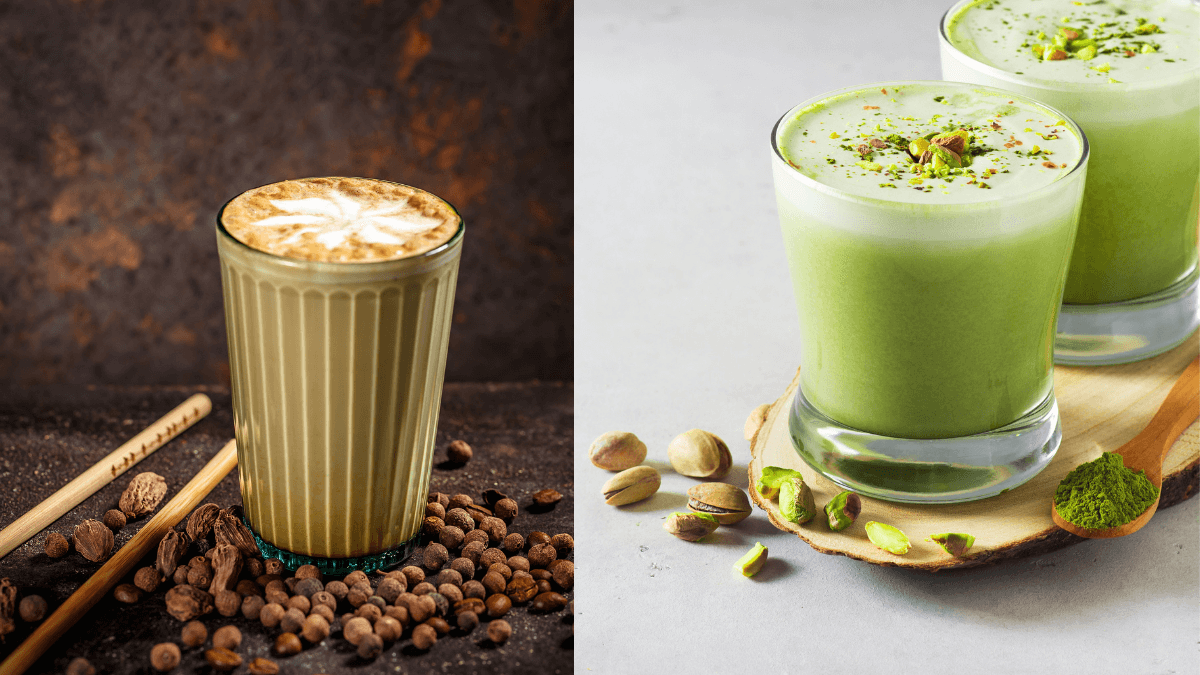
Have you ever wondered if there’s a tea latte alternative to the classic Matcha Latte? Well, there’s a new contender in town. Recently, the Hojicha Latte has appeared on café menus around the world.
So, what is a Hojicha Latte? It’s similar to a Matcha Latte—but toastier. While a Matcha Latte has a grassy, fresh taste, the Hojicha Latte offers a more roasted, mellow flavor. The color is also clearly different: Hojicha is brown, while Matcha is vibrant green.
In this article, we’ll compare the two and help you decide which is right for you.
Table of Contents
Let’s Go Back to the Basics: What Are These Teas?
Before we discuss flavors and lattes, let’s explore the origins and characteristics of Hojicha and Matcha—two unique yet closely related members of the Japanese green tea family.
What Is Hojicha Tea and When Did It First Develop?
Hojicha (ほうじ茶) is a roasted Japanese green tea that has been enjoyed for generations. Unlike other green teas, which are typically steamed, Hojicha is roasted over high heat, giving it its signature toasty, slightly nutty aroma. This process not only alters the flavor but also turns the leaves a warm brown color.
Hojicha was first developed in Kyoto in the 1920s, when a tea merchant decided to roast leftover green tea leaves, stems, and twigs to reduce waste. The result? A smooth, low-caffeine tea with a comforting roasted flavor that quickly became a staple in Japanese homes.

What Is Matcha and When Did It First Develop?
Matcha (抹茶), on the other hand, is a finely ground powder made from specially grown and processed green tea leaves. Unlike traditional teas where you steep the leaves and discard them, with Matcha, you consume the whole leaf—making it one of the most nutrient-rich teas in the world.
Matcha has deep roots in Japanese culture and dates back to the 12th century, when Zen Buddhist monks introduced it from China. Over time, it became central to the Japanese tea ceremony, symbolizing mindfulness and purity.

How Is Hojicha Made?
To make Hojicha, tea producers usually use bancha (mature leaves) or sometimes kukicha (twig tea). These are roasted in a porcelain pot over charcoal, a technique that reduces bitterness and brings out mellow, caramel-like notes. The roasting process also lowers the caffeine content, making it a great option for evening sipping or for those sensitive to caffeine.
How Is Matcha Made?
Matcha production begins with shade-grown tea plants, which are covered for about three weeks before harvest. This boosts chlorophyll levels and gives Matcha its bright green hue and umami flavor. After harvesting, the leaves are steamed, dried, and ground into a fine powder using traditional stone mills. The result is a vibrant green powder packed with antioxidants, amino acids, and energy-boosting properties.
How Do You Brew Each of Them?
Brewing Hojicha:
Hojicha is brewed similarly to other loose-leaf teas. Use about 1 teaspoon of tea per cup, steep it in hot water (around 80–90°C or 176–194°F) for 30–60 seconds, and enjoy its toasty aroma and smooth taste. You don’t need any fancy tools—just a teapot or a strainer.
Preparing Matcha:
Matcha takes a little more effort but is well worth it. Use a bamboo whisk (chasen) to blend 1–2 teaspoons of Matcha powder with about 2 ounces of hot water (not boiling, ideally 70–80°C or 158–176°F). Whisk in a zigzag motion until frothy. For a Matcha Latte, simply add steamed milk of your choice.
Taste and Aroma Comparison: Hojicha vs. Matcha
| Feature | Hojicha 🍂 | Matcha 🍵 |
|---|---|---|
| Flavor Profile | Roasted, nutty, earthy, slightly sweet | Grassy, vegetal, umami-rich, slightly bitter |
| Aroma | Toasty, warm, caramel-like, smoky notes | Fresh, grassy, marine-like, slightly sweet |
| Texture | Smooth, light-bodied, mellow | Creamy, rich, full-bodied (especially in latte) |
| Aftertaste | Clean, subtly sweet, lingering roast | Bold, slightly bitter, lingering umami |
| Bitterness | Very low to none | Medium (varies by quality and preparation) |
| Sweetness | Naturally mild and toasty | Minimal; often sweetened in lattes |
| Color | Light brown to amber | Vibrant green |
| Best Served | Hot or iced, plain or in lattes | As a traditional tea or Matcha latte |
Benefits of Hojicha vs. Matcha: Which Tea Wins?
Both teas offer impressive health perks, but they serve different purposes depending on your lifestyle.
🟤 Hojicha Benefits:
- Low in caffeine – Great for evening relaxation or caffeine-sensitive individuals.
- Soothing and gentle on the stomach – Thanks to its roasting process.
- Contains antioxidants and L-theanine for calm alertness.
🟢 Matcha Benefits:
- High in antioxidants, particularly catechins like EGCG, which support metabolism and immune function.
- Boosts energy and focus – Due to its combination of caffeine and L-theanine.
- May improve skin health and detoxification, thanks to its chlorophyll content.
In short, if you want a calm energy boost, go for Matcha. If you’re looking for a caffeine-free, cozy cup, Hojicha is your friend.
What Is a Hojicha Latte? And What Is a Matcha Latte?
You’ve likely seen the iconic green Matcha Latte on coffee shop menus—but Hojicha Latte is the new kid on the block, and it’s gaining popularity fast.
🌿 Matcha Latte:
- Bright green, slightly bitter with vegetal notes.
- Made by whisking Matcha powder with hot water and then adding steamed milk.
- Often sweetened with honey, maple syrup, or vanilla.
☕ How to Make a Matcha Latte at Home
- Whisk the Matcha: Sift 1–2 teaspoons of Matcha powder into a bowl. Add 2 ounces of hot water (around 75–80°C or 170–175°F) and whisk briskly in a zigzag motion using a bamboo whisk (chasen) until frothy.
- Steam the Milk: Heat your choice of milk (dairy, oat, almond, etc.) until hot but not boiling. Froth it using a milk frother or whisk for that creamy latte texture.
- Combine and Sweeten: Pour the steamed milk into your whisked Matcha. Stir gently and sweeten to taste with honey, maple syrup, or vanilla. Enjoy!

🌰 Hojicha Latte:
- Light brown or beige, with a roasted, nutty flavor.
- Made by steeping Hojicha tea (or using Hojicha powder) and adding steamed milk.
- Naturally sweeter and smoother than Matcha, requiring less sweetener.
🍂 How to Make a Hojicha Latte at Home
- Brew the Hojicha: Use 1–2 teaspoons of loose-leaf Hojicha or 1 teaspoon of Hojicha powder. For loose-leaf, steep in hot water (90°C or 194°F) for about 1 minute. For powder, whisk it with hot water just like Matcha.
- Steam the Milk: Heat your preferred milk (like oat, soy, or dairy) and froth until creamy. Hojicha pairs especially well with slightly sweet or nutty milks.
- Combine and Sweeten: Pour the frothed milk into the brewed Hojicha. Stir and add your sweetener of choice—brown sugar, honey, or a dash of cinnamon work beautifully.
Final Thoughts: Hojicha vs. Matcha — Which One Should You Choose?
Both Hojicha and Matcha offer something special. Whether you’re sipping Matcha for a mid-morning energy boost or winding down with a warm Hojicha Latte in the evening, there’s no wrong choice—just different vibes.
Looking to start your day with mental clarity and antioxidants? Go green with Matcha.
Craving a comforting, low-caffeine tea that tastes like roasted marshmallows? Cozy up with Hojicha.
Related Post: