
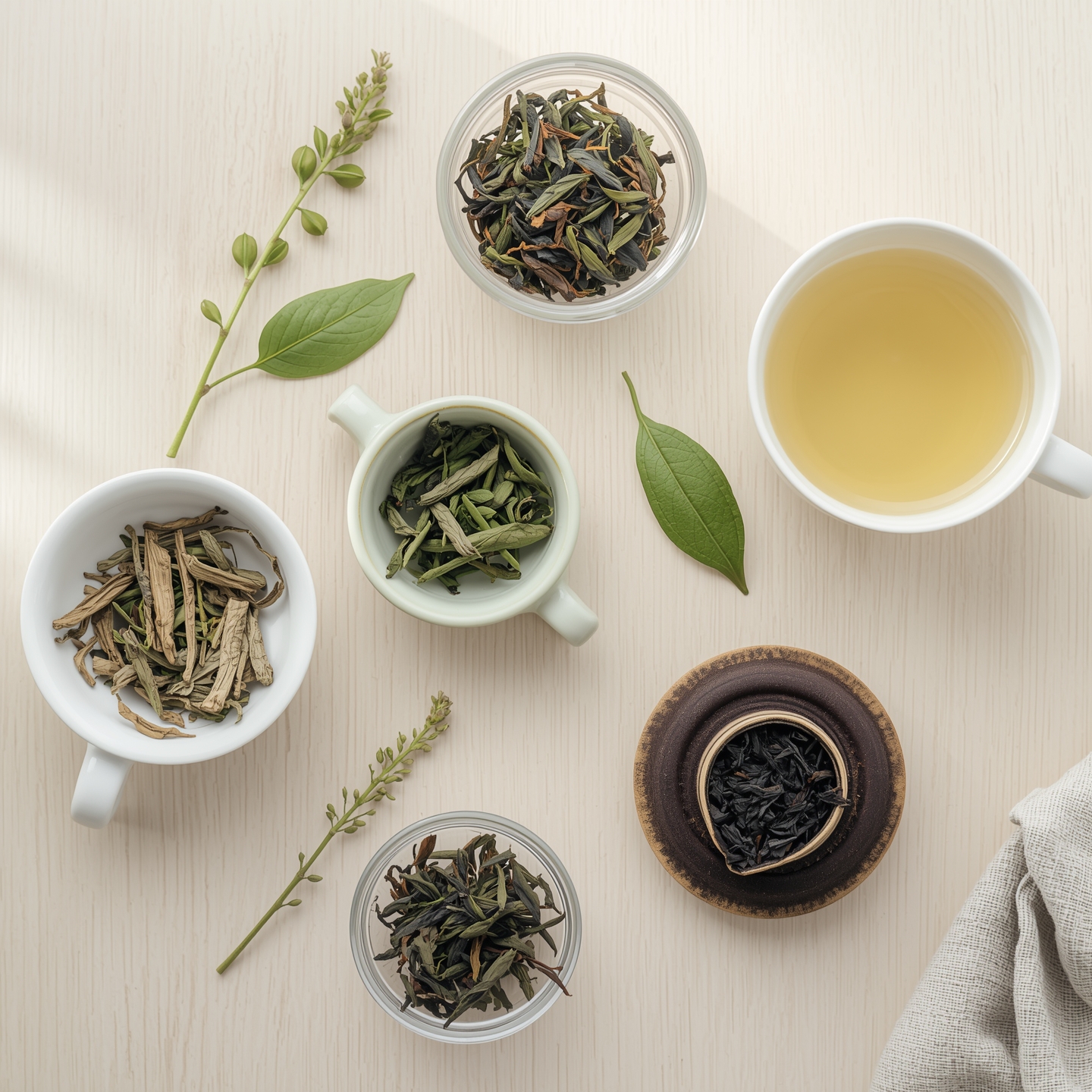
Welcome to the wonderful world of tea. It is the world’s second most popular drink. It is only behind water. All true tea comes from one plant. That plant is called Camellia sinensis. The magic happens after the leaf is picked. The processing decides everything. It decides the color. It decides the flavor. It decides the type of tea you will drink.
This guide will walk you through the five main types. We will cover their unique tastes. We will cover how to brew them. We will cover their health benefits. Let’s begin our journey.
The Core of All Tea: Processing is Everything
Imagine a tea leaf fresh from the bush. It is green and full of moisture. What happens next is called oxidation. Oxidation is a chemical reaction. It is like when an apple turns brown after you cut it. For tea, we can control this process. We can stop it. We can allow it. We can even encourage fermentation after. This single step creates all the variety you see.
The Tea Table at a Glance
| Type of Tea | Oxidation Level | Key Characteristics | Brewing Temp & Time | Classic Example |
|---|---|---|---|---|
| White Tea | Minimal (0-10%) | Delicate, sweet, floral. Least processed. Pale liquor. | 70-80°C (160-175°F) 1-3 minutes | Silver Needle (Bai Hao Yinzhen) |
| Green Tea | Unoxidized | Grassy, vegetal, fresh, or nutty. Leaves are heat-treated to halt oxidation. | 70-85°C (158-185°F) 1-3 minutes | Sencha, Dragon Well (Longjing) |
| Oolong Tea | Partially Oxidized (10-85%) | A wide spectrum from floral & creamy to toasty & robust. Often rolled. | 85-95°C (185-205°F) 2-4 minutes | Tie Guan Yin, Da Hong Pao |
| Black Tea | Fully Oxidized | Bold, malty, rich, often with notes of stone fruit or honey. Called “Red Tea” in China. | 95-100°C (200-212°F) 3-5 minutes | Assam, Darjeeling, Earl Grey |
| Pu-erh Tea | Post-Fermented | Aged, earthy, woody, sometimes musty. Can be raw (sheng) or ripe (shou). | 95-100°C (200-212°F) 2-5 minutes (or more) | Ripe (Shou) Pu-erh Cake |
Now, let’s meet the main types of tea.
White Tea: Delicate and Pure
White tea is the least processed of all teas. The leaves are simply picked and dried. They are often still covered in fine, white hairs. This gentle care creates a delicate flavor.
What it tastes like: Think of subtle flavors. It is naturally sweet. It has floral notes. Sometimes it has hints of melon or cucumber. It is light and refreshing. It is never bitter if brewed right.
How to brew it: Use water well below boiling. Water that is too hot will scald the leaves. Aim for 70-80°C (160-175°F). Steep for 1 to 3 minutes. You can often steep white tea multiple times. Each steeping reveals a new layer of flavor.
A note on health: White tea has the highest level of antioxidants. Antioxidants help protect your cells. This is because it undergoes minimal processing. These antioxidants may support skin health. They may also help with overall wellness.

Green Tea: Fresh and Vibrant
Green tea skips oxidation. The leaves are heated very soon after picking. This heat stops the oxidation process. In China, they often pan-fire the leaves. In Japan, they steam them. This gives Japanese greens a more vegetal taste.
What it tastes like: The flavor is fresh and clean. You might taste grass, spinach, or steamed vegetables. Some green teas are nutty. Some are sweet like seaweed. A good green tea should be vibrant, not bitter.
How to brew it: Like white tea, green tea needs cooler water. Use 70-85°C (158-185°F). Steep for a short time, 1 to 3 minutes. If your tea tastes bitter, use cooler water. Use a shorter steeping time.
A note on health: Green tea is famous for its health benefits. It contains a catechin called EGCG. This is a powerful antioxidant. Studies link green tea to a healthy metabolism. It is also linked to heart health and brain function.
Oolong Tea: The Master’s Craft
Oolong tea is the artisan’s choice. It is partially oxidized. The oxidation level can be anywhere from 10% to 85%. This creates a huge range of flavors. The leaves are also rolled or twisted. This shapes the leaf and controls the infusion.
What it tastes like: Oolong is complex. Light oolongs taste floral and creamy. They can smell like orchids or lilacs. Darker oolongs taste toasty and robust. They might have notes of honey, stone fruit, or roasted nuts. Every sip is a discovery.
How to brew it: Use hotter water here, 85-95°C (185-205°F). This helps open up the rolled leaves. Steep for 2 to 4 minutes. High-quality oolong can be steeped many times. The flavor changes beautifully with each pot.
A note on health: Oolong sits between green and black tea. It offers a mix of their benefits. It is known to aid digestion. Many drink it after a meal. It also contains metabolism-supporting compounds. It can be a gentle, uplifting drink.
Black Tea: Bold and Beloved
Black tea is fully oxidized. This gives the leaves their dark color. It also develops strong, rich flavors. This is the most common tea in the Western world. In China, they call it “red tea” because of the color of the brew.
What it tastes like: The flavor is bold and assertive. You will taste malt, honey, and dried fruit. Some black teas are spicy. Some are smoky. It stands up well to milk and sugar. But try it plain first to appreciate its depth.
How to brew it: Black tea can handle boiling water. Use 95-100°C (200-212°F). Steep for 3 to 5 minutes. Steeping too long can make it unpleasantly bitter. A hearty breakfast blend is a perfect way to start the day.
A note on health: Black tea is rich in theaflavins. These are antioxidants formed during oxidation. They are linked to supporting heart health. Black tea also contains caffeine for a gentle lift. It may also support gut health.
Pu-erh Tea: Earthy and Aged
Pu-erh is in a category of its own. It comes from China’s Yunnan province. It undergoes microbial fermentation after processing. It is then aged for years, even decades. It is often pressed into cakes or bricks.
What it tastes like: The flavor is deep and earthy. It is often described as woody, musty, or like rich soil. It is smooth, thick, and incredibly grounding. The taste mellows and improves with age, like a fine wine.
How to brew it: Use boiling water at 100°C (212°F). Rinse the leaves first with a quick, 5-second steep. Pour this water out. Then steep for 2 to 5 minutes. Traditional method uses a very high leaf-to-water ratio with very short steeps.
A note on health: Pu-erh is famous in traditional medicine for aiding digestion. The fermentation creates unique probiotics. These may support a healthy gut microbiome. Many also drink it to help manage cholesterol levels.
Brewing the Perfect Cup: A Simple Rule
Remember this simple rule. “The lighter the tea, the cooler the water.”
- Delicate Teas (White, Green): Cool water (70-85°C). Short steep (1-3 min).
- Robust Teas (Oolong, Black, Pu-erh): Hot water (85-100°C). Longer steep (2-5 min).
Start with these guidelines. Then adjust to your taste. Your perfect cup is out there. It is waiting for you to brew it. Tea is not a race. It is a moment of calm. Enjoy the ritual. Enjoy the aroma. Most of all, enjoy the flavor.
Related Posts: