
You Bought the Good Tea—Now What?
So, you finally got your hands on the famous Ancient Wellness Trio. You have the little red Goji berries, the knobby Ginseng root, and the golden Osmanthus flowers that smell like a candy shop. You are ready to feel like an emperor. But wait—do you just toss it all in a cup and hope for the best?
Here is the truth: if you brew it wrong, you lose the flavor. And worse, you might lose the benefits. Ginseng is tough. It takes time to wake up. Osmanthus is delicate. It can burn if the water is too hot. This is not a race; it is a science. Today, we are going to master the art of brewing goji, ginseng, and osmanthus tea. We will cover the perfect steeping times, the right temperature, and three delicious variations to keep things exciting.

Why Brewing Method Matters
First, let us understand why we cannot treat this blend like a regular tea bag. Black tea usually takes about 3 minutes to steep. Green tea takes 2 minutes. But this trio is different.
- Ginseng root is dense and woody. It needs time and heat to release its good chemicals, called ginsenosides. If you rush it, you just get hot water.
- Goji berries are dried fruit. They need to rehydrate to puff up and release their sweet, tangy juice.
- Osmanthus flowers are paper-thin. They release their apricot perfume almost instantly, but if the water is boiling hot, they will “cook” and turn bitter.
The goal is to balance these three personalities. We want the strength of the root, the sweetness of the berry, and the perfume of the flower—all in one cup.
The Perfect Base Recipe
This is your starting point. Master this, and you can build anything.
Ingredients:
- 5 to 6 dried Goji berries
- 2 to 3 thin slices of dried Ginseng (or about 1/4 teaspoon of Ginseng powder if that is what you have)
- 1 heaping teaspoon of dried Osmanthus flowers
- 12 ounces of filtered water (tap water with a strong chlorine smell can ruin the delicate floral notes)
Equipment:
- A teapot or a large mug
- A small plate or lid to cover your cup
- A kettle
- A timer (your phone works great)
Step-by-Step Instructions:
- Warm Your Vessel: Pour a little hot water into your teapot or mug, swirl it around, and pour it out. This keeps the temperature steady so your tea doesn’t cool down too fast.
- Add the Leaves: Place the Goji berries, Ginseng slices, and Osmanthus flowers into your pot. If you have an infuser basket, use it. It makes cleaning up much easier.
- Heat the Water to the Right Spot: Boil your water. Then, take the lid off the kettle and let it sit for about 60 to 90 seconds. You are aiming for 195°F (90°C) . If you do not have a thermometer, look for the stage where the water is steaming hard but not bubbling like crazy. If it is roaring boil, it is too hot.
- Pour and Cover: Pour the hot water over the herbs. Immediately cover the mug or pot with a lid or a small plate. This traps the steam and the essential oils from the Osmanthus, which is where the smell comes from.
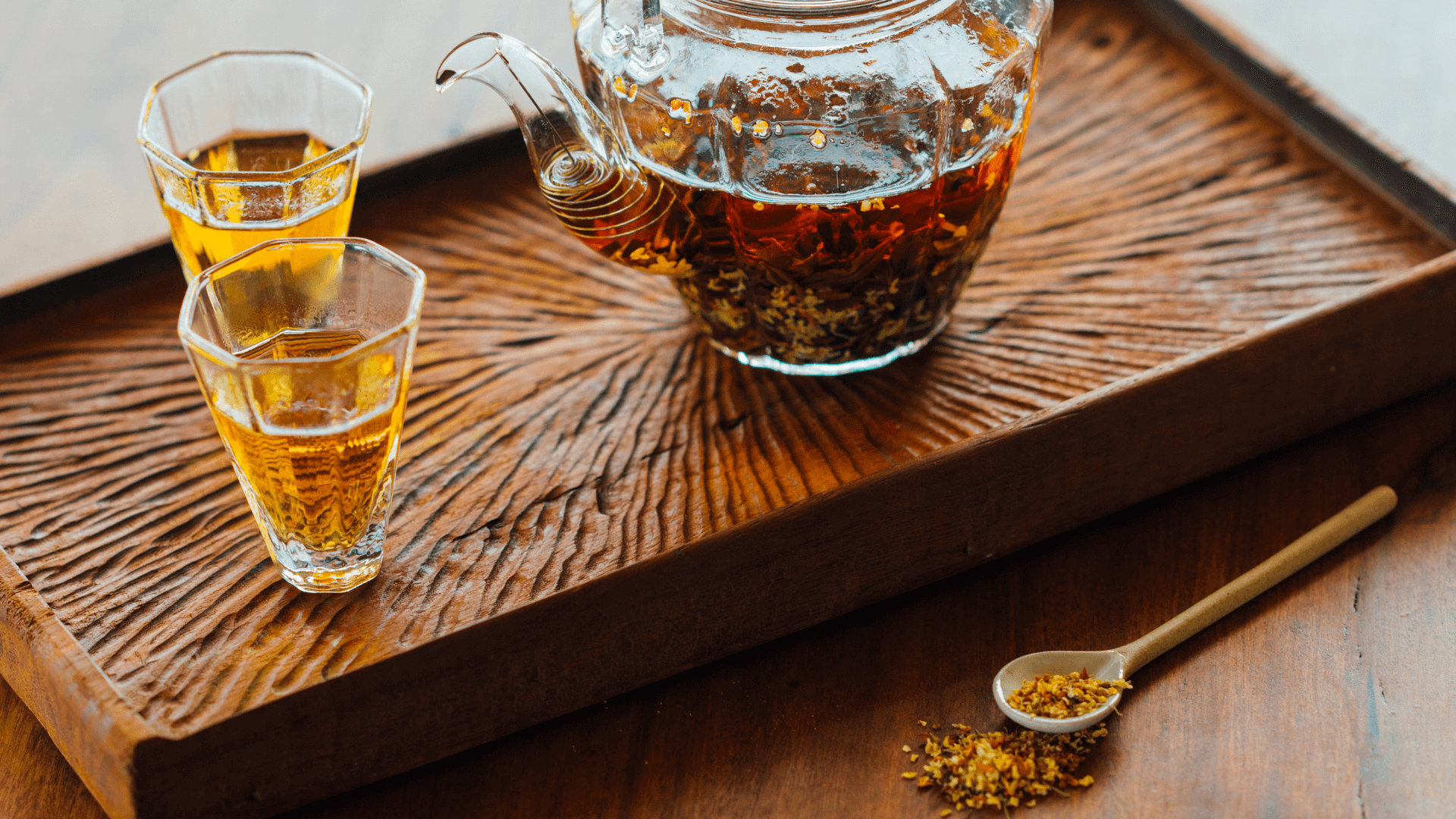
- Set the Timer: This is the most important step. Set your timer for 7 minutes. I know this feels like forever. You might be used to 3-minute teas. But trust the process. At 3 minutes, the water will be lightly colored but the Ginseng will still be sleeping. At 5 minutes, the Goji berries will start to plump. At 7 minutes, the magic happens. The water turns a beautiful golden-amber, the berries float to the top like little red balloons, and the aroma fills the room.
- Stir and Sip: Give the tea a gentle stir. Take a moment to inhale the apricot scent. Then, take your first sip. Notice how the sweetness hits first, then the earthiness, then the floral finish.
Three Delicious Variations
Once you have mastered the base recipe, it is time to play. Here are three ways to change up your cup depending on your mood or the weather.
Variation 1: The Iced Summer Refresher
This tea is fantastic cold. The floral notes become even more refreshing on a hot day.
- How to do it: Brew the tea using the base recipe, but use double the amount of herbs. For example, use 10-12 Goji berries and 2 heaping teaspoons of Osmanthus. This creates a “concentrate.” After 7 minutes, remove the herbs. Let the tea cool to room temperature, then pour it over a tall glass filled with ice.
- Pro Tip: Add a sprig of fresh mint or a slice of cucumber. It sounds fancy, but it tastes like a spa day.
Variation 2: The Honeyed Comfort Cup
Ginseng can be slightly bitter if you are new to it. Honey is the perfect bridge. It rounds out the edges and makes the tea taste like a warm hug.
- How to do it: Brew the base recipe as usual. While the tea is hot, stir in 1 teaspoon of raw honey. Do not add honey to boiling water (which we aren’t using anyway) because high heat can destroy the good enzymes in raw honey.
- Pro Tip: Use a mild honey like acacia or orange blossom. Strong honey like buckwheat can overpower the delicate Osmanthus.
Variation 3: The Citrus-Boosted Energizer
Want to wake up your immune system? Add a little citrus. The vitamin C helps your body absorb the antioxidants from the Goji berries, and the bright flavor pairs perfectly with the floral notes.
- How to do it: Brew the base recipe. When you pour the hot water into the cup, add a thin slice of fresh lemon or orange right into the pot with the herbs. Let it steep together for the full 7 minutes. The heat will gently release the oils from the citrus peel.
- Pro Tip: If you like it a little tangier, squeeze a tiny bit of lemon juice into the cup after steeping. Start with just a drop—you can always add more, but you cannot take it out!

Common Mistakes to Avoid
Even experienced tea drinkers make these errors. Here is what to watch out for:
- Mistake #1: Using Boiling Water. This is the number one killer of Osmanthus flavor. If the water is too hot, the flowers turn bitter and the tea loses its sweetness. Always let the kettle rest for a minute after boiling.
- Mistake #2: Rushing the Steep. If you stop at 3 or 4 minutes, you are drinking colored water. The Ginseng needs time. Set the timer and walk away. Come back when it beeps.
- Mistake #3: Throwing Away the Goji Berries. Do not toss them! After you finish your tea, the Goji berries will be plump and soft. They are now rehydrated and delicious. Eat them with a spoon as a little treat. They are packed with vitamins and taste like a sweet, fruity snack.
Can You Re-Steep the Leaves?
Yes! This is one of the best parts about high-quality herbal blends. The Ginseng root, in particular, has a lot of goodness left after the first steep.
- Second Steep: Use the same herbs and the same water temperature, but add 1 or 2 minutes to the steeping time (try 8 or 9 minutes). The flavor will be slightly milder, but still delicious.
- Third Steep: You can sometimes get a third steep, but the Osmanthus scent will be very faint by then.
Conclusion
Brewing Goji Ginseng Osmanthus tea is not difficult, but it does require a little patience and love. Remember the golden rules: 195°F water, 7 minutes covered, and a timer on your phone. Whether you drink it hot on a cold morning, iced on a summer afternoon, or boosted with honey and lemon when you feel a cold coming on, this ancient trio is here to help you feel your best.
So go ahead. Boil that kettle. Set that timer. And enjoy a cup of tea that tastes like it was made just for you.
Related Post: