
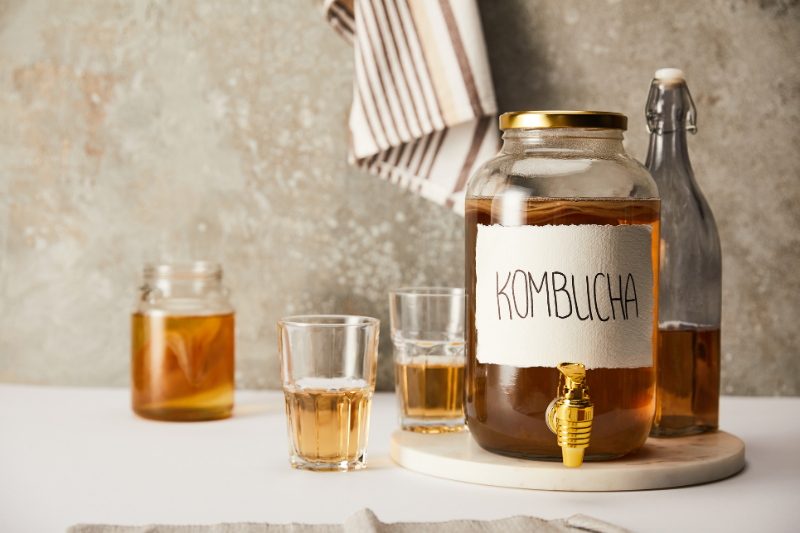
Have you ever seen a strange, fizzy drink in the store with a weird, floating blob in the bottle? Or maybe you’ve heard your friends talking about drinking something called “booch.” What is this mysterious, tangy drink that everyone seems to love? It’s called kombucha (say it: kom-BOO-cha).
You might be wondering: Is it soda? Is it juice? The surprising answer is that it starts with something much simpler: tea. That’s right, your grandma’s favorite drink is the secret behind this modern, bubbly sensation. But how does a calm cup of tea turn into this super-powered, fizzy drink?
Today, we’re going on a science and flavor adventure. We’ll crack the code on how kombucha is made, discover its surprising health benefits, and learn why it’s so much more than just a fun drink. Get ready to become a kombucha expert!
So, What Exactly IS Kombucha?
Let’s start with the basics. Kombucha is fermented tea.
“Fermented” is just a fancy word that means good, tiny living things (like bacteria and yeast) have been eating the sugars in the tea and turning it into something new. It’s the same process that turns milk into yogurt or grapes into wine. In this case, we start with sweet tea and end up with a tangy, slightly sweet, and fizzy drink.
But the real magic of how kombucha relates to tea is in its very first step. Every single batch of kombucha in the world begins with three simple things:
- Tea (usually black or green tea)
- Sugar
- A SCOBY (This is the weird part! Keep reading…)

Meet the SCOBY: The “Superhero” of Kombucha
This is the coolest part. SCOBY stands for Symbiotic Culture Of Bacteria and Yeast. It looks like a rubbery, flat, beige pancake. Some people call it the “kombucha mushroom,” but it’s not a mushroom at all. It’s a living community!
Think of the SCOBY as a tiny, floating city. The yeast and bacteria are the citizens. They work together (that’s the “symbiotic” part) to create the kombucha you drink. Here’s how the magic happens:
Step 1: The Sweet Tea Starter
First, someone brews a strong pot of tea and dissolves sugar into it. They let it cool completely. This sweet tea is like a delicious food buffet for the SCOBY citizens.
Step 2: The Fermentation Party
The SCOBY is placed in the sweet tea. The jar is covered with a cloth (to keep bugs out but let air in) and left alone for 1-2 weeks.
- The Yeast citizens eat the sugar and create alcohol and bubbles (carbonation).
- The Bacteria citizens then eat that alcohol and turn it into healthy acids.
Step 3: The Finished Drink
After the party, the sweet tea is gone. In its place is kombucha! It’s less sweet, tangy, fizzy, and full of the healthy acids and probiotics created by our SCOBY friends. The SCOBY grows a brand new layer during this process, which can be used to start another batch.
So, how does kombucha relate to tea? Tea is the foundation, the home, and the original food source for the entire fermentation process. Without tea, there is no kombucha.
Why Do People Drink It? The Big List of Kombucha Health Benefits
Okay, so it’s a cool science project. But why do millions of people drink it? It turns out, the fermentation process doesn’t just change the flavor—it creates some powerful ingredients that are great for your body. Let’s explore the science-backed health benefits of kombucha.
1. It’s a Probiotic Powerhouse
This is the biggest benefit. Remember, probiotics are the “good guy” live bacteria that help your gut. Kombucha is absolutely packed with them. Drinking it is like sending in a friendly army to help your digestive system. This can help:
- Keep your gut bacteria balanced.
- Improve digestion.
- Support your immune system (since a huge part of it is in your gut!).
2. It’s Loaded with Antioxidants
The tea we start with (especially green tea) is already full of antioxidants. These are molecules that fight “free radicals” in your body that can damage your cells. The amazing news? The fermentation process in kombucha can actually help your body absorb these antioxidants even better.
3. It Can Help Control Harmful Bacteria
One of the main acids made during fermentation is called acetic acid (the same acid in vinegar). This acid has powerful antibacterial properties. This means kombucha can help fight the growth of bad bacteria and yeasts in your gut, giving the good probiotics more room to thrive.
4. It May Be Good for Your Heart
Some early studies on animals have shown that kombucha can improve two major markers of heart health: it can lower “bad” LDL cholesterol and raise “good” HDL cholesterol. More research is needed with people, but the early signs are promising!
5. A Healthier Alternative to Soda
Let’s be real: plain kombucha tastes way more exciting than water! It’s naturally fizzy and flavorful. This makes it a perfect swap for sugary sodas or juices. You get the fun fizz without the sugar crash, plus all the added health perks.

A Few Important Things to Know Before You Try It
Kombucha is powerful, so it’s smart to be informed.
- Start Slow: If you’ve never had it, start with just a few sips or a small glass. Your body needs to get used to the probiotics.
- Check the Sugar: While much of the sugar is eaten during fermentation, some remains. Always check the label and choose brands with lower sugar (under 10 grams per serving is a good goal).
- There’s a Tiny Bit of Alcohol: Because it’s fermented, kombucha contains a very small amount of alcohol (usually less than 0.5%, which is less than a ripe banana!). It’s legally considered non-alcoholic.
- Home Brewing Caution: Making kombucha at home is fun, but you must be very clean. If the SCOBY gets moldy (it will look fuzzy blue, green, or black), you must throw the entire batch away.
The Bottom Line: Is Kombucha a Magic Elixir?
Kombucha isn’t a magic cure-all, but it is a truly unique and healthy drink. It takes the ancient goodness of tea and, through the amazing process of fermentation, supercharges it with probiotics, acids, and antioxidants.
It connects us to a world of tiny, living creatures working together to create something delicious and good for us. The next time you see that bottle in the fridge, you’ll know the incredible science and story behind the fizz. So go ahead, take a sip of your tangy, fermented tea, and give a silent “thank you” to the wonderful, weird world of the SCOBY. Your taste buds—and your gut—might just throw a little party of their own.
Related Post: